
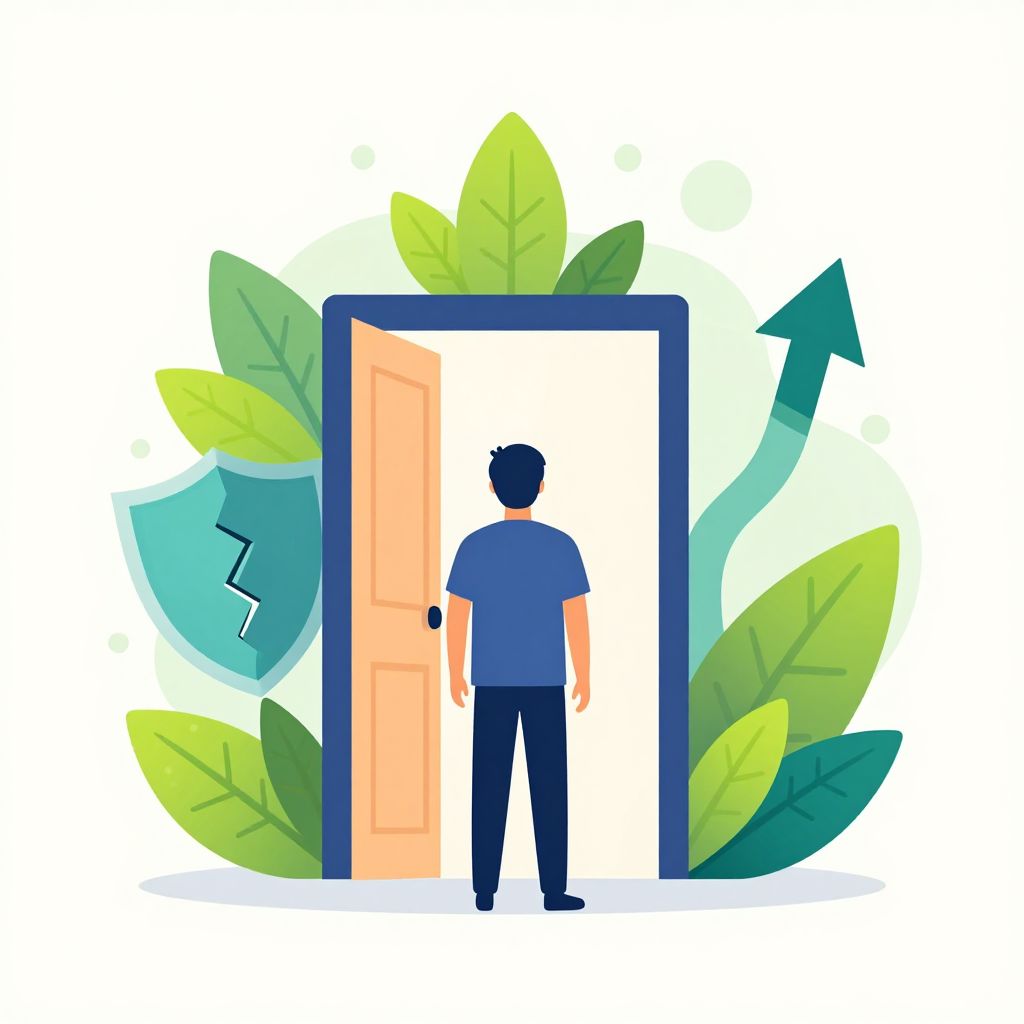
Rejection hurts in a way that few other experiences can match. Research from neuroscientist Naomi Eisenberger shows that social rejection activates the same brain regions responsible for processing physical pain, which means your body literally treats rejection like an injury.
The sting you feel when someone says no to your idea, your application, your romantic interest, or your effort is real, measurable, and hardwired into your nervous system. But understanding how rejection works gives you the tools to respond differently.
How Do You Handle Rejection?
You handle rejection by recognizing it as information rather than identity, creating distance between the event and your self-worth, processing the emotional response without suppressing it, and taking deliberate action that rebuilds your sense of agency. Rejection becomes manageable when you stop treating it as a verdict on your value and start treating it as feedback on a specific situation.
Separate the Event from Your Identity
Your brain wants to turn rejection into a story about who you are. Psychologists call this cognitive fusion: the tendency to merge thoughts with reality.
When someone rejects your work, your mind might jump to “I’m not good enough.” But the actual event is far more specific: one person, in one context, made one decision.
The rejection happened to something you did, not to who you are. That distinction matters more than almost anything else in how you recover.
Researcher Carol Dweck’s work on mindset reveals that people who separate outcomes from identity recover faster and try again sooner. They see rejection as situational rather than permanent.
Process the Pain Without Amplifying It
Feeling hurt after rejection is appropriate and healthy. Suppressing that hurt creates more problems than it solves.
Studies on emotional regulation show that people who acknowledge difficult emotions without judgment experience shorter periods of distress than those who try to push feelings away. Name what you feel: disappointment, embarrassment, sadness, anger.
Give yourself a specific window to feel it fully. Twenty minutes of honest acknowledgment does more for your recovery than three days of distraction.
The key is to feel the emotion without building a narrative around it. You can feel sad without deciding that sadness defines your future.
Why Rejection Feels So Threatening
Your Brain Treats Social Pain Like Physical Pain
The anterior cingulate cortex, which lights up when you burn your hand, shows the same activity when someone excludes you from a group. Evolution wired humans this way because, for most of human history, social rejection meant death.
Being cast out from the tribe meant losing access to food, protection, and reproductive opportunities. Your brain still responds to a declined job application like your ancestors responded to exile.
This explains why rejection feels disproportionately painful compared to its actual consequences. Your nervous system hasn’t caught up to the reality that one person saying no will not end your survival.
Rejection Triggers the Threat Response
When you face rejection, your amygdala activates the fight-or-flight response. Cortisol floods your system.
This physiological reaction makes clear thinking nearly impossible in the immediate aftermath. You’re not overreacting when rejection feels overwhelming; your body is genuinely preparing for danger.
Understanding this response helps you stop judging yourself for feeling bad. You’re not weak or overly sensitive. You’re human, with a nervous system doing exactly what it was designed to do.
What To Do Immediately After Rejection
1. Create Physical Distance
Step away from the situation if possible. Go for a walk, change rooms, or shift your physical position.
Movement interrupts the stress response and helps regulate your nervous system. Research on bilateral stimulation shows that rhythmic movement, like walking, helps process difficult experiences faster.
2. Acknowledge What Happened Without Dramatizing It
State the facts to yourself in the simplest terms possible. “They said no to my proposal.” “She wasn’t interested in a second date.” “The publisher declined my manuscript.”
Facts are clean. Stories are where suffering multiplies. Keep your initial processing factual.
3. Reach Out to Someone Safe
Isolation makes rejection worse. Psychologist John Cacioppo’s research on loneliness shows that social connection acts as a buffer against psychological pain.
Talk to someone who won’t minimize your feelings or turn the conversation into advice. You need presence, not solutions, in the first few hours.
4. Do One Small Thing You Control
Rejection strips away your sense of agency. Rebuild it with tiny actions: make your bed, cook a meal, organize a drawer, complete a small task.
These actions remind your brain that you still have influence over your environment. Agency returns through action, not through waiting to feel better first.
How To Think About Rejection Differently
Reframe It As Data
Every rejection contains information, though not always the information you assume. Sometimes it tells you that your approach needs adjustment.
Sometimes it tells you that the fit wasn’t right. Sometimes it tells you that timing, resources, or external factors played a bigger role than your actual quality.
Ask yourself: what specific feedback, if any, did this rejection provide? Not every no comes with useful data, but many do if you look without defensiveness.
Recognize the Role of Chance
Many rejections have less to do with merit than with circumstances you can’t see or control. The hiring manager had a terrible morning, the publisher already signed a similar book, the person you asked out just ended a relationship.
Stanford psychologist Albert Bandura’s research on chance encounters shows that random factors play a massive role in outcomes people attribute to worthiness. You often get rejected for reasons that have nothing to do with you.
This isn’t about making excuses. It’s about seeing reality clearly: competence and value don’t guarantee acceptance in every situation.
Use It To Refine Your Direction
Repeated rejections in one area sometimes signal a need to adjust your strategy, timing, or target. If you’ve applied to fifty jobs in one field with no callbacks, the market might be telling you something about demand, fit, or presentation.
This doesn’t mean you’re pursuing the wrong goal. It might mean you need a different approach, more preparation, or a clearer niche.
Rejection becomes useful when you treat it as diagnostic information rather than as judgment. Doctors run tests that come back negative all the time; that’s how they figure out the right treatment.
Building Long-Term Resilience to Rejection
Increase Your Exposure Gradually
Resilience to rejection builds like muscle: through progressive exposure. People who seek small rejections regularly, like asking for minor discounts or pitching ideas in low-stakes environments, develop higher tolerance over time.
Familiarity with the feeling reduces its power. When rejection becomes ordinary rather than catastrophic, you recover faster and risk more.
Cultivate Multiple Sources of Worth
People who tie their entire identity to one domain suffer most when that domain produces rejection. If your self-worth depends entirely on romantic success, a breakup becomes existential.
If it depends only on career achievement, a professional setback destroys you. Psychologists call this “self-concept clarity”: the degree to which you see yourself through multiple, distinct roles and competencies.
Build a life where rejection in one area doesn’t collapse your entire sense of value. Relationships, skills, creative pursuits, physical health, community involvement: each acts as a stabilizing force when others face setbacks.
Track Your Recovery Pattern
Pay attention to how long it takes you to bounce back from rejection. Most people recover faster than they predict.
Researchers call this “affective forecasting error”: humans consistently overestimate how long negative emotions will last. Noticing that you feel better three days later, not three months later, builds confidence for the next rejection.
You have more evidence of resilience than you think. Count the rejections you’ve already survived. They didn’t end you.
When To Seek Additional Support
Persistent Avoidance After Rejection
If you stop trying anything new for weeks or months after a rejection, the emotional impact has moved beyond normal processing. Avoidance becomes a problem when it restricts your life rather than protecting it.
Physical Symptoms That Don’t Resolve
Sleep disruption, appetite changes, or persistent fatigue lasting more than a couple of weeks after rejection might signal that your nervous system needs more support. These symptoms indicate that the stress response hasn’t returned to baseline.
Thoughts That Turn Dark
If rejection triggers thoughts of worthlessness, hopelessness, or self-harm, reach out to a mental health professional immediately. Those thoughts are symptoms, not truths, and they respond to treatment.
Rejection can activate or worsen depression, and depression lies about what’s possible. Get help distinguishing between normal disappointment and something more serious.
The Uncomfortable Truth About Rejection
You will never eliminate rejection from your life. Anything worth pursuing involves the risk of hearing no.
The people who build meaningful careers, relationships, and creative work don’t avoid rejection. They just get better at moving through it.
Resilience isn’t about not feeling pain; it’s about not letting pain make your decisions. You feel the sting, you acknowledge the disappointment, and then you choose what happens next.
Research from psychologist Angela Duckworth on grit shows that high achievers don’t have thicker skin. They have clearer reasons for continuing despite discomfort.
When your direction matters more than your comfort, rejection becomes a cost you’re willing to pay rather than a sign to quit. That shift changes everything.
Moving Forward After No
The day after rejection, do something small in the direction you were already headed. If someone rejected your article pitch, read about writing.
If you didn’t get the job, update one line on your resume. If the date didn’t work out, go somewhere you enjoy alone.
Forward movement doesn’t require confidence or certainty. It just requires the next step, taken before you feel completely ready.
Rejection only wins when it convinces you to stop. Every time you continue despite the no, you prove that rejection has limits to its power.
You’ve survived every rejection so far. That’s not luck; that’s evidence of capacity you already possess.
If you’re working through rejection, you might find it helpful to explore related topics like how to focus on yourself during difficult transitions or how to stop thinking about someone when romantic rejection creates intrusive thoughts. These resources build on the same principles: distance from the event, clarity about what you control, and deliberate steps toward the life you want to build.