
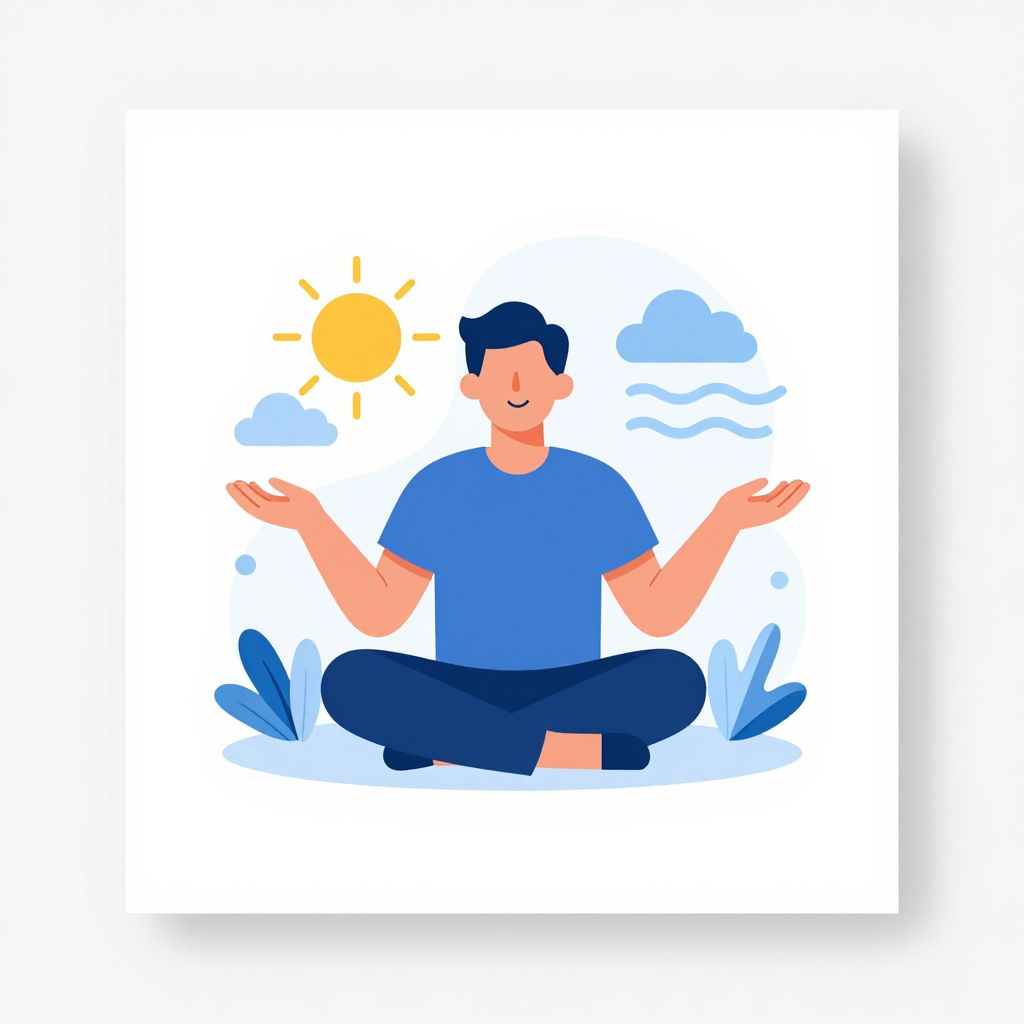
People admire someone who stays calm when the world around them loses its cool. That person doesn’t panic in traffic, doesn’t spiral over minor setbacks, and somehow manages to make life look easier than everyone else finds it. Being chill isn’t about caring less or checking out emotionally—it’s about responding to life with steadiness instead of reactivity.
Research in emotional regulation shows that people who maintain calm under pressure don’t possess magical temperaments. They’ve built specific mental habits that buffer them against stress and keep their nervous systems regulated even when circumstances turn difficult.
How Do You Become a Chill Guy?
You become chill by training your nervous system to stay regulated under pressure, practicing non-reactivity to minor irritations, and building confidence through competence in areas that matter to you. Calmness is a skill you develop through repeated exposure to stressors while consciously choosing measured responses instead of emotional reactions.
1. Understand What Chill Actually Means
Being chill doesn’t mean being passive or indifferent. It means you’ve developed enough emotional control that you choose your responses instead of letting circumstances choose them for you.
The truly chill person cares deeply about things that matter. They simply don’t burn energy on things that don’t.
Psychologist Susan David’s research on emotional agility shows that people who navigate life most successfully don’t suppress emotions—they acknowledge feelings without being controlled by them. They create space between stimulus and response.
That space is where chill lives. It’s the pause before you reply to a frustrating email, the breath you take before reacting to criticism, the moment you choose curiosity over defensiveness.
2. Regulate Your Nervous System
Your ability to stay chill depends largely on your autonomic nervous system. When your sympathetic nervous system stays chronically activated, you live in a state of low-grade emergency.
Polyvagal theory, developed by Dr. Stephen Porges, explains that your vagus nerve acts as a brake on your stress response. People who seem naturally calm have strong vagal tone—their nervous systems return to baseline quickly after stress.
You can strengthen your vagal tone deliberately:
- Practice slow, deep breathing (5 seconds in, 7 seconds out) for five minutes daily
- Take cold showers or splash cold water on your face to activate the dive reflex
- Hum, sing, or gargle to stimulate the vagus nerve directly
- Spend time in natural settings without your phone
- Maintain consistent sleep and eating schedules to reduce physiological stress
These aren’t relaxation techniques in the spa-day sense. They’re nervous system training that makes baseline calmness your default state instead of something you have to manufacture.
3. Stop Catastrophizing Small Problems
Anxious people turn molehills into mountains through a cognitive distortion called catastrophizing. They take a minor problem and immediately imagine the worst possible chain of consequences.
Chill people have trained themselves to assess problems accurately instead of amplifying them. They ask better questions when something goes wrong.
Instead of “What if this ruins everything?” they ask “What’s actually happening right now?” Instead of “This is a disaster,” they ask “What’s the next useful action?”
Cognitive behavioral research consistently shows that the stories you tell yourself about events matter more than the events themselves. Two people experience the same traffic jam—one rages against it while the other accepts it and uses the time to listen to something interesting.
The difference isn’t the circumstance. It’s the narrative.
Build Real Confidence Through Competence
Nothing makes you chiller than knowing you can handle what life throws at you. Confidence isn’t positive thinking—it’s evidence you’ve built through repeated successful navigation of challenges.
Develop Skills That Matter
When you’re genuinely good at things that matter in your life, you don’t need to prove yourself constantly. That desperation to be seen or validated evaporates.
Pick three areas that directly impact your daily life—maybe cooking, basic home repairs, financial management, physical fitness, or clear communication. Build real competence in those areas through deliberate practice.
Self-efficacy theory, developed by psychologist Albert Bandura, demonstrates that people who believe in their ability to handle situations approach life with less anxiety. That belief doesn’t come from affirmations—it comes from actual mastery experiences.
You can’t fake your way to genuine chill. You earn it by becoming someone who legitimately can handle things.
Accept What You Can’t Control
The Stoics figured this out two thousand years ago, and modern psychology has confirmed it: trying to control uncontrollable things creates suffering.
Chill people have internalized the difference between what they can influence and what they can’t. They don’t waste energy trying to change other people, rewrite the past, or force specific outcomes.
This doesn’t mean they’re fatalistic. They focus intense effort on their choices, their responses, their preparation, and their perspective—the things actually under their control.
Research on locus of control shows that people with an internal locus (believing their actions matter) combined with acceptance of external factors they can’t change experience less stress and greater life satisfaction than those who try to control everything or believe they control nothing.
Master Non-Reactivity in Daily Life
Chill isn’t just a personality trait you either have or don’t. It’s a moment-by-moment practice of choosing non-reactivity when your instinct is to react.
Create Buffer Space in Communication
The fastest way to seem unchill is to respond immediately to everything with full emotional intensity. Chill people build in natural delays.
When someone sends an irritating message, they don’t fire back instantly. They read it, notice their reaction, and then decide if responding immediately serves any purpose.
Often it doesn’t. The emotional charge dissipates in twenty minutes, and what seemed urgent to address reveals itself as trivial.
This isn’t game-playing or manipulation. It’s emotional regulation in action.
Lower Your Baseline Stimulation
Your nervous system can only handle so much input before everything feels like too much. People who seem perpetually frazzled often live in a state of constant stimulation—notifications pinging, screens glowing, noise everywhere, schedules packed.
Chill people protect their sensory environment. They turn off non-essential notifications, create quiet time in their day, and build in buffers between activities instead of racing from one thing to the next.
Research on sensory processing shows that everyone has different thresholds for stimulation, but exceeding your personal threshold puts your nervous system in defense mode. You can’t stay chill when your system interprets normal life as a constant low-level threat.
Practice Outcome Independence
Unchill people attach their worth and emotional state to specific outcomes. They need the date to go perfectly, the presentation to wow everyone, the friend to respond enthusiastically.
When you need specific outcomes to feel okay, you set yourself up for chronic anxiety. Life rarely cooperates with detailed scripts.
Chill people care about outcomes but don’t need them to be okay. They prepare well, do their best, and genuinely accept whatever happens without collapsing or inflating their self-worth based on results.
This is outcome independence—caring without clinging, trying without desperately needing. It comes from having a stable sense of self that doesn’t fluctuate wildly based on external validation.
Develop a Sustainable Pace
You can’t maintain chill while running yourself into the ground. People who seem calm and steady have usually built lives that support calmness rather than constantly undermining it.
Protect Your Energy Budget
You have finite emotional and cognitive energy each day. Chill people recognize this and spend their energy budget wisely instead of burning it all before noon.
This means saying no to commitments that drain you without meaningful return. It means batching similar tasks instead of constant context-switching. It means identifying your peak energy hours and protecting them for work that matters.
Research on decision fatigue and ego depletion shows that your capacity for emotional regulation decreases as the day progresses and as you make more decisions. Everything feels harder and more annoying when you’re running on fumes.
Chill people structure their lives to avoid running on fumes whenever possible.
Build Recovery Into Your Rhythm
Athletes understand that recovery is when growth happens, not during the workout itself. The same principle applies to psychological resilience.
You can’t stay regulated without regular downtime that actually restores you. Scrolling social media doesn’t count—that’s stimulation pretending to be rest.
Real recovery looks like activities that engage you without demanding performance: walking without a destination, reading fiction, cooking a meal slowly, having an unstructured conversation, or simply sitting outside without an agenda.
The research on psychological detachment shows that people who fully disconnect from work demands during off-hours return with better focus, creativity, and emotional regulation than those who stay partially engaged.
Reframe How You Interpret Social Situations
Much of what seems like personality differences between chill and anxious people comes down to interpretation. The same interaction gets processed completely differently.
Assume Neutral Intent
Anxious people assume negative intent. Someone doesn’t text back quickly, and they spiral into worries about what they did wrong.
Chill people default to neutral or positive assumptions. The person is probably busy, forgot, or dealing with something unrelated to them.
This isn’t naive optimism—it’s probabilistic thinking. Most of the time, people’s behavior has nothing to do with you. They’re managing their own lives, distractions, and problems.
Research on attribution theory shows that how you explain others’ behavior dramatically affects your stress levels and relationship quality. Assuming malice where none exists creates constant unnecessary conflict.
Stop Seeking Reassurance
Constantly asking “Are we okay?” or “Did I say something wrong?” or “Are you mad at me?” signals deep insecurity. It also places an exhausting burden on others to constantly validate you.
Chill people trust that if something is genuinely wrong, they’ll hear about it. They don’t need constant confirmation that everything is fine.
This comes from self-trust. You trust your ability to handle it if someone is upset. You trust that relationships worth maintaining can tolerate normal friction without constant smoothing.
Let Small Things Go Unaddressed
Not everything requires processing, discussion, or resolution. Some annoyances genuinely don’t matter enough to mention.
Unchill people feel compelled to address every tiny issue immediately. Someone used a mildly annoying tone, and they need to talk about it.
Chill people have higher thresholds for what warrants attention. They let small stuff pass because making an issue of it costs more energy than just moving on.
This isn’t conflict avoidance—it’s proportional response. Save your relationship capital for things that actually matter instead of spending it on trivia.
Cultivate Genuine Humor and Perspective
People who stay chill have usually developed the ability to find genuine humor in life’s absurdities without being mean-spirited about it.
Laugh at Yourself
Taking yourself too seriously makes everything feel heavier than it needs to be. When you can laugh at your own mistakes and quirks, you signal to yourself and others that imperfection doesn’t threaten you.
This doesn’t mean self-deprecation or putting yourself down. It means acknowledging the gap between your intentions and results with lightness instead of shame.
Research on self-compassion by Kristin Neff shows that people who treat themselves with kindness when they fail show greater resilience and less anxiety than those who harshly criticize themselves. Humor is one form that kindness takes.
Zoom Out Regularly
Most of what feels critically important today won’t matter next month. Chill people have practiced zooming out to gain perspective.
When something feels overwhelmingly stressful, ask: “Will this matter in a year?” Often the answer is no, and that realization immediately reduces the emotional charge.
This isn’t minimizing real problems. It’s correctly sizing problems so your response matches their actual importance.
Final Thoughts on Becoming Chill
Being chill isn’t about caring less—it’s about caring more skillfully. It’s choosing what deserves your emotional energy and what doesn’t.
You develop this capacity through nervous system regulation, competence-building, thought pattern correction, and sustainable lifestyle design. None of it happens overnight, but each small shift compounds.
Start with one area from this article that resonated most. Maybe it’s building buffer space before responding to messages, or practicing vagal nerve exercises, or stopping yourself from catastrophizing the next minor setback.
Pick that one thing and practice it deliberately for two weeks. Notice what changes, both internally and in how others respond to you.
Chill isn’t a personality you’re born with—it’s a skill you build through thousands of small choices to respond rather than react, to accept rather than resist, and to focus your energy where it actually makes a difference.
If you found this exploration of maintaining calm useful, you might also benefit from understanding how to be cool in social situations or learning how to be nonchalant when circumstances test your composure. Both topics complement the practices outlined here and offer additional perspectives on emotional regulation and social confidence.