
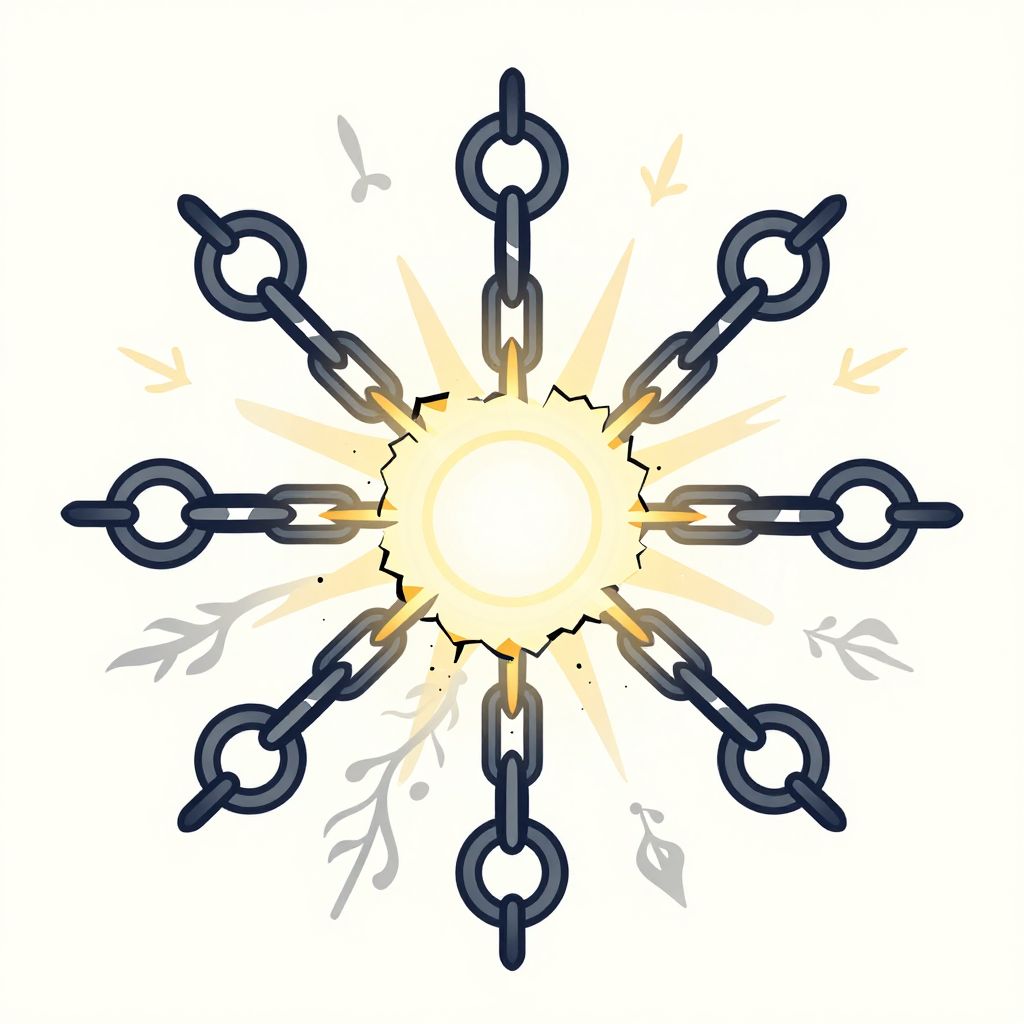
Families pass down recipes, heirlooms, and traditions. They also pass down patterns of behavior that hurt more than they help. These invisible inheritances—cycles of addiction, abuse, financial instability, or emotional unavailability—feel inevitable until someone decides to stop them.
Breaking generational curses isn’t mystical or metaphorical work. It’s the deliberate process of identifying inherited patterns, understanding their roots, and replacing destructive behaviors with healthier ones that research confirms actually work.
How Do You Break Generational Curses?
You break generational curses by recognizing the specific patterns you inherited, understanding the psychological mechanisms that keep them alive, and systematically replacing them through intentional behavior change and, when needed, professional support. This process requires honest self-examination, consistent action, and often the guidance of therapy or counseling to address deep-rooted trauma responses.
1. Name the Pattern You’re Repeating
You can’t change what you won’t acknowledge. The first step requires brutal honesty about which behaviors you’ve inherited and continue to practice.
Research in epigenetics shows that trauma can actually alter gene expression across generations. A landmark study on Holocaust survivors found that their children showed changes in stress hormone regulation, even without experiencing the trauma directly.
This doesn’t mean you’re doomed to repeat history. It means you carry a heightened sensitivity to certain stressors, making awareness even more critical.
Common generational patterns include:
- Emotional unavailability or difficulty expressing feelings
- Patterns of addiction or substance dependence
- Financial instability or self-sabotage around money
- Relationship dynamics involving control, avoidance, or codependency
- Parenting styles that repeat authoritarian or neglectful approaches
- Unaddressed mental health conditions like depression or anxiety
Write down the specific behaviors you see in yourself that mirror your parents or grandparents. Not vague concepts—actual, observable actions.
2. Understand the Function, Not Just the Failure
Every destructive pattern once served a purpose. Your grandfather’s emotional distance might have been a survival mechanism during war or poverty.
Your mother’s controlling behavior might have developed as her way of managing chaos she couldn’t otherwise control. Understanding the original function doesn’t excuse the harm, but it does remove some of the shame that keeps patterns locked in place.
Psychologist Dr. Gabor Maté describes this as distinguishing between “What’s wrong with you?” and “What happened to you?” That shift in perspective opens the door to compassion for yourself and previous generations.
This doesn’t mean you accept the behavior. It means you see it clearly enough to choose differently.
3. Identify Your Triggers and Default Responses
Generational patterns activate most strongly under stress. You need to know exactly when you’re most likely to repeat them.
Do you shut down emotionally when conflict arises, just like your father did? Do you overspend when you feel anxious, mirroring your mother’s coping mechanism?
Create a trigger map by asking:
- What situations make me act in ways I later regret?
- Which emotions feel most overwhelming or unmanageable?
- When do I sound exactly like the parent I swore I’d never become?
- What complaints do people close to me repeatedly make about my behavior?
The pattern loses power the moment you can predict it. Self-awareness creates the pause between stimulus and response where change becomes possible.
Why Awareness Alone Doesn’t Break the Cycle
Knowing you have a problem and changing it are entirely different skills. Insight feels like progress, but behavior change requires different work.
The Gap Between Knowing and Doing
Neuroscience research shows that repeated behaviors create neural pathways that fire automatically. Your brain literally builds highways for habits you’ve practiced for years.
Simply deciding to change doesn’t reroute those pathways. You need consistent, repeated practice of new behaviors to build alternative routes.
Think of it like learning to write with your non-dominant hand. You know how writing works, but your hand doesn’t cooperate smoothly until you’ve practiced extensively.
The Role of Nervous System Regulation
Generational trauma often lives in your nervous system, not just your conscious mind. Polyvagal theory explains how your autonomic nervous system can get stuck in patterns of fight, flight, or freeze.
When triggered, your rational brain goes offline. No amount of insight helps when your nervous system has hijacked your response.
Effective regulation practices include:
- Deep breathing exercises that activate the parasympathetic nervous system
- Progressive muscle relaxation to release stored tension
- Mindfulness meditation to increase awareness of physical sensations
- Regular physical movement to process stress hormones
- Consistent sleep schedules to support overall nervous system health
You’re essentially teaching your body that it’s safe to respond differently. This takes time and repetition.
Building New Patterns That Actually Stick
Breaking a curse means replacing it with something better. Empty space fills with whatever comes next, so you need to be intentional about what you build.
Start Smaller Than Feels Meaningful
Most people fail because they try to overhaul everything at once. Research on habit formation shows that tiny, consistent actions create lasting change far more effectively than dramatic overhauls.
If you grew up in a home where no one talked about feelings, don’t aim to have deep emotional conversations daily. Start by naming one emotion you feel each day.
If financial instability runs in your family, don’t try to master investing immediately. Begin by checking your bank balance weekly without judgment.
The pattern you’re building matters more than the size of the action. Consistency rewires your brain and proves to yourself that change is actually possible.
Create External Structure for Internal Change
Willpower fails under stress, which is exactly when generational patterns resurface. You need systems that work even when motivation disappears.
James Clear’s research on habit formation emphasizes environment design over self-control. Make the behavior you want easier to do than the pattern you’re trying to break.
Practical structure examples:
- Schedule therapy appointments at the same time weekly so you don’t rely on motivation
- Automate savings transfers so financial responsibility doesn’t require daily willpower
- Create a specific script for conflict conversations to avoid defaulting to silence or explosion
- Establish a pre-bedtime routine that signals your nervous system to regulate
- Join a support group with fixed meeting times for accountability
You’re not building character here. You’re building a life that doesn’t require you to be perfect to make progress.
Find Models of What You’re Trying to Build
You can’t create what you’ve never seen. If healthy emotional expression wasn’t modeled in your family, you need to see it somewhere else.
This isn’t about finding perfect people. It’s about studying specific skills in action.
Watch how certain friends handle disagreement without shutting down. Notice how some colleagues set boundaries without guilt or aggression.
Ask people you respect how they learned skills you’re trying to develop. Most people are surprisingly willing to share their own struggles and strategies.
When Professional Help Becomes Non-Negotiable
Some patterns run too deep for self-help alone. Knowing when you need outside support is a strength, not a failure.
Signs You Need Therapy or Counseling
Certain generational patterns require professional intervention because they involve trauma responses beyond conscious control.
Seek professional help if you experience:
- Repeated relationship failures that follow the same pattern
- Intense emotional reactions that feel disproportionate to current situations
- Substance use that mirrors addiction patterns in your family
- Intrusive thoughts about past family trauma
- Physical symptoms like panic attacks or chronic tension without medical cause
- Difficulty forming secure attachments in relationships
- Self-harm or suicidal thoughts of any kind
Therapy provides tools and perspective you simply can’t access alone. A trained therapist helps you see blind spots, process stored trauma, and practice new responses in a safe environment.
Choosing the Right Therapeutic Approach
Not all therapy works equally well for generational patterns. Research supports specific approaches for inherited trauma.
Trauma-focused cognitive behavioral therapy (TF-CBT) helps you identify and change thought patterns connected to family trauma. Eye Movement Desensitization and Reprocessing (EMDR) processes traumatic memories that keep you stuck.
Internal Family Systems (IFS) therapy specifically addresses inherited patterns by exploring different “parts” of yourself that carry family roles. Attachment-based therapy rebuilds your capacity for healthy relationships.
Ask potential therapists directly about their experience with intergenerational trauma. The right fit matters more than credentials alone.
Protecting the Next Generation
Breaking the cycle means the patterns stop with you. This requires conscious parenting and relationship choices, even if you don’t have children yet.
Communicate Age-Appropriately About Family Patterns
Children benefit from honest, simple explanations about family history. This doesn’t mean oversharing trauma details—it means acknowledging reality.
“Grandpa struggled with anger because of hard things that happened to him. I’m learning better ways to handle frustration so I don’t pass that to you.”
Research on adverse childhood experiences (ACEs) shows that children who understand their family context develop better coping skills than those left to interpret dysfunction alone.
You’re giving them the awareness you wish you’d had earlier. That’s a gift disguised as a difficult conversation.
Model Repair, Not Perfection
You will mess up. You’ll catch yourself repeating the exact pattern you’re working to break.
The difference isn’t avoiding mistakes—it’s what you do after them. Dr. Dan Siegel’s research on attachment shows that repair after rupture builds secure relationships more than avoiding conflict altogether.
When you lose your temper, you apologize specifically and explain what you’ll do differently. When you shut down emotionally, you come back when you’re regulated and try again.
Your children don’t need perfect parents. They need parents who take responsibility and keep trying.
Create New Traditions Intentionally
Generational curses thrive in unconscious repetition. New patterns require conscious creation.
If your family never expressed affection, establish a bedtime routine of verbal affirmations. If holidays were sites of conflict, create new traditions focused on connection rather than performance.
These don’t need to be elaborate. Simple, repeated practices build the culture you want your family to inherit instead.
Handling Resistance From Family Members
Your decision to change will make some people uncomfortable. Growth threatens systems that rely on everyone staying the same.
Why Your Changes Trigger Others
When you stop participating in dysfunctional patterns, you implicitly challenge others who continue them. Your growth can feel like judgment, even when you don’t intend it that way.
Family systems theory explains that families unconsciously assign roles to maintain equilibrium. When you step out of your assigned role, the whole system destabilizes.
This isn’t a reason to stay stuck. It’s preparation for the pushback you’ll likely face.
Setting Boundaries Without Burning Bridges
You can break cycles without cutting off everyone who hasn’t. Boundaries protect your progress while maintaining relationships where possible.
Effective boundaries sound like:
- “I’m not discussing my therapy or personal growth with you, but I’d love to talk about other things.”
- “I’m leaving when the conversation becomes disrespectful. I’ll call you tomorrow.”
- “I’m making different choices about parenting. I’m not asking for your approval, but I do want to stay connected.”
- “I can visit for two hours on holidays instead of full days right now.”
Some relationships won’t survive your growth. That’s painful and sometimes necessary for your wellbeing and the wellbeing of future generations.
Measuring Progress When Change Feels Slow
Breaking generational patterns takes years, not months. You need ways to recognize progress that don’t depend on feeling completely different.
Track Behavior, Not Feelings
Emotions lag behind behavioral change. You might still feel anxious about money while consistently saving, or feel disconnected while practicing emotional expression.
Keep a simple log of new behaviors: “Had a disagreement with my partner and stayed present instead of leaving the room.” “Felt the urge to overspend but called my sponsor instead.”
These documented moments prove progress when your feelings tell you nothing’s changing. Trust the data over the emotion.
Notice What No Longer Happens
The absence of old patterns is progress, even when it feels like nothing special. You didn’t explode in anger this month. You didn’t self-sabotage the new opportunity.
What you’re not doing anymore matters as much as what you’re building. Both count as breaking the curse.
Celebrate Small Wins Explicitly
Your brain needs positive reinforcement to maintain new neural pathways. Acknowledge progress out loud, write it down, or share it with someone who understands the work you’re doing.
This isn’t toxic positivity. It’s strategic reinforcement of the behaviors you want to become automatic.
The Long View: What Breaking the Curse Actually Looks Like
You won’t arrive at a finish line where all generational patterns disappear forever. You’ll build a life where you catch yourself sooner, recover faster, and pass on more healing than harm.
Success looks like your children feeling safe to express emotions you had to suppress. It looks like financial stability becoming boring rather than constantly dramatic.
It looks like choosing partners who respect you instead of recreating your parents’ dysfunction. It looks like apologizing to your kids for mistakes instead of denying them.
You’re not aiming for perfection. You’re aiming for measurable improvement across time and the end of patterns that have caused harm for generations.
The work is hard and often lonely. Few people understand what it costs to be the one who stops the cycle.
But the alternative—continuing to pass down pain you didn’t choose to receive—costs more. Every small choice toward change weakens the pattern’s grip and strengthens your capacity to live differently.
Start with one pattern. Name it clearly. Seek help where you need it. Build the smallest version of a new behavior. Track your progress without judgment.
The curse breaks one intentional decision at a time, day after day, until the pattern that defined generations finally ends with you.
For more guidance on personal transformation, explore how to become a better person through intentional daily practices. If family dynamics involve harmful relationships, learning how to deal with toxic people becomes part of protecting the progress you’re building. Both resources offer practical strategies that support the deeper work of breaking generational patterns and creating lasting change.