
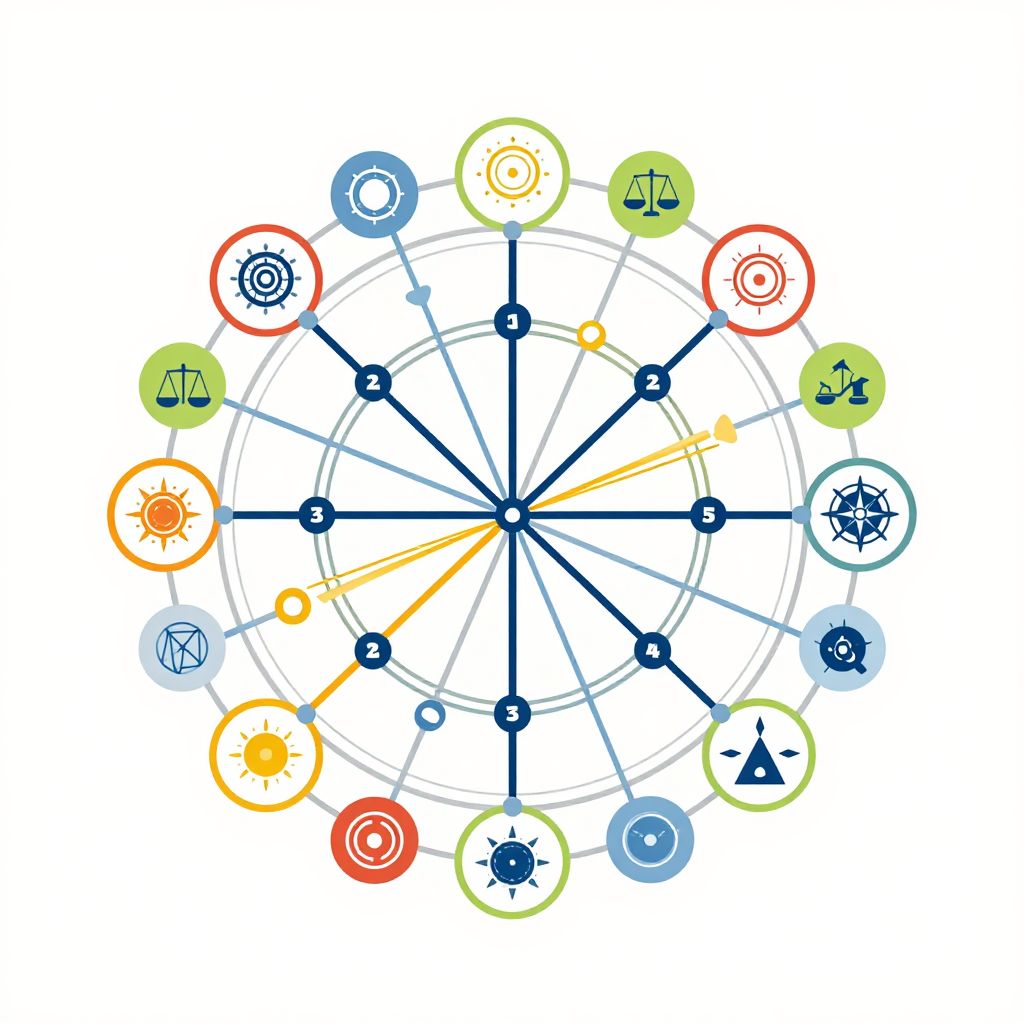
You open a destiny matrix chart for the first time and see a grid of numbers, lines connecting them, and some kind of symbolic arrangement you’re supposed to decode. The promise sounds appealing: a map of your strengths, challenges, and life purpose all laid out in front of you. But without a clear method to interpret what you’re looking at, the chart becomes just another colorful image that sits in a folder on your desktop.
Learning to read a destiny matrix chart requires understanding its foundational structure, recognizing what each position represents, and interpreting the archetypal meanings of the numbers based on tarot and numerology systems. This skill doesn’t require mystical ability, just methodical observation and a willingness to see patterns in how personality traits and life circumstances actually show up in daily behavior.
How Do You Read a Destiny Matrix Chart?
You read a destiny matrix chart by first identifying your birth date numbers, then mapping them onto specific positions in the matrix grid that represent different life areas such as talents, relationships, purpose, and challenges. Each number corresponds to a Major Arcana tarot card, and you interpret the meaning based on both the card’s traditional symbolism and the position it occupies in your personal chart.
1. Understand the Basic Structure of the Chart
The destiny matrix chart organizes around your birth date, broken into day, month, and year components. These numbers generate a geometric pattern, typically displayed as a square or diamond shape with connecting lines.
The chart contains several key positions: a center point representing your core energy or life purpose, corner positions indicating major life themes, and connecting lines that reveal how different aspects of your personality interact. Each position serves a specific interpretive function, similar to how astrological houses each govern different life areas.
Most charts display numbers ranging from 1 to 22, corresponding directly to the 22 Major Arcana cards of the tarot. Numbers beyond 22 reduce through addition until they fall within this range, following basic numerological principles that have roots in Pythagorean number theory.
The visual layout matters because the proximity and connection between numbers reveal how different aspects of your character support or challenge each other. Two numbers sitting side by side suggest energies that blend naturally, while numbers in opposing corners often represent internal tensions you navigate throughout life.
2. Calculate Your Primary Numbers
Start with your birth date written in numerical format: day, month, and year. Each component generates specific energies in the matrix system.
Add the digits of your birth day together until you reach a number between 1 and 22. If your birth day is 28, you add 2 plus 8 to get 10, which corresponds to the Wheel of Fortune card in tarot.
Repeat this process for your birth month and birth year. For months, the number stays as is if it’s already under 13, but larger sums reduce down.
For the year, add all four digits together and continue reducing until you reach a single or double digit under 22. Someone born in 1985 would calculate: 1 + 9 + 8 + 5 = 23, then 2 + 3 = 5.
These three core numbers form the foundation of your entire chart. Everything else derives from their combination and interaction.
3. Place Numbers in Their Designated Positions
The destiny matrix uses a specific template with predetermined positions for each calculated number. Your birth day number typically occupies the top position, representing your natural talents and the qualities you express most easily.
Your birth month number often sits on the left or right side, governing relationships, partnerships, and how you connect with others. This position reveals patterns in how you give and receive support.
Your birth year number usually anchors the bottom or center of the chart, representing your soul’s purpose or the major life lessons you came here to learn. Research in narrative psychology shows that people do tend to organize life experiences around core themes that remain consistent across decades, lending some psychological validity to this interpretive approach.
Additional numbers populate the chart by adding combinations of your primary three numbers together, then reducing them. These secondary numbers fill connecting lines and intermediate positions, creating a complete map of personality dimensions.
4. Interpret Each Number Through Its Tarot Correspondence
Each number from 1 to 22 links to a specific Major Arcana tarot card, and you interpret the number by understanding what that card traditionally represents. The number 1 connects to The Magician, symbolizing initiative, skill, and creative power.
The number 13, often misunderstood, corresponds to the Death card, which actually represents transformation, letting go, and necessary endings that make room for new growth. In a destiny matrix chart, this number suggests someone whose life path involves significant reinventions and the ability to release what no longer serves them.
Higher numbers carry more complex energies because they contain multiple digits that each add meaning. The number 19, corresponding to The Sun card, indicates optimism, vitality, and success, but someone with this number in a challenging position might struggle with unrealistic expectations or the pressure to always appear positive.
You don’t need to memorize all 22 meanings immediately. Start with the traditional tarot interpretations, which have remained relatively stable across centuries and cultures, then refine your understanding by observing how these energies actually manifest in behavior patterns.
Key Positions in the Matrix and What They Reveal
The Center Point: Your Core Energy
The number at the center of your matrix represents your essential nature, the energy that powers everything else you do. This position reveals what motivates you at the deepest level, often outside conscious awareness.
When your center number aligns with your conscious goals and daily actions, life tends to feel purposeful and energizing. When misalignment exists, you experience that familiar sense of going through motions without genuine engagement.
People with lower numbers at center, such as 1 through 5, often show more direct, action-oriented approaches to life. Higher numbers, particularly those in the teens, suggest more complex internal worlds and a need for deeper meaning beyond surface accomplishments.
The Talent Line: Natural Abilities
One section of the chart, usually running vertically or diagonally, represents your inherent talents and the skills you develop most easily. These numbers don’t guarantee success, but they do indicate areas where effort yields disproportionate results.
Someone with The Empress (number 3) in this position naturally understands beauty, nurturing, and creative expression. They don’t have to force artistic sensibility because it flows as a default mode of perception.
The talent line also reveals potential blind spots because gifts that come easily often receive less conscious development. The person who naturally understands people might never learn systematic communication frameworks, assuming everyone shares their intuitive grasp.
The Challenge or Karma Line: Growth Areas
Another section highlights your primary challenges, sometimes called karmic lessons in destiny matrix terminology. These numbers point to qualities you must consciously develop because they don’t arise naturally.
If The Emperor (number 4) appears here, you likely struggle with structure, discipline, and authority, either submitting too readily or rebelling against necessary boundaries. Your growth involves finding healthy relationship with order and personal sovereignty.
Psychological research on post-traumatic growth shows that people often develop their greatest strengths precisely in areas where they initially struggled most. The destiny matrix challenge line essentially maps these growth edges before you encounter them, giving you preview of the curriculum your life will present.
Partnership and Relationship Positions
Specific positions in the matrix govern how you show up in close relationships, romantic partnerships, and collaborative endeavors. These numbers reveal both what you bring to connections and what you seek from others.
The Lovers card (number 6) in a relationship position suggests someone who values harmony, mutual growth, and genuine intimacy. But it can also indicate decision paralysis in relationships or difficulty maintaining boundaries when partnership demands self-sacrifice.
Comparing your relationship numbers with a partner’s chart creates compatibility insight, though compatibility depends more on mutual willingness to understand different operating systems than on perfectly matched numbers.
Common Interpretation Mistakes to Avoid
Reading Numbers as Fixed Destiny Rather Than Potential
The biggest error newcomers make treats the destiny matrix as deterministic prophecy rather than psychological map. Your chart reveals tendencies, not fate.
Someone with The Tower (number 16) in a prominent position will likely experience significant disruptions and sudden changes, but how they respond to those disruptions remains entirely within their control. The number describes the weather pattern, not your choice of clothing.
Research in personality psychology consistently shows that while temperamental tendencies remain relatively stable, the behaviors and outcomes they generate vary widely based on context, choice, and conscious development. Your matrix describes your starting equipment, not your final level.
Ignoring Number Combinations and Interactions
Each number in isolation tells only part of the story. The real insight emerges from observing how different numbers in your chart interact and modify each other.
A challenging number like The Devil (15), representing attachment, materialism, or compulsive patterns, softens considerably when adjacent to The Star (17), which brings hope, inspiration, and faith in better possibilities. The combination suggests someone who recognizes their own destructive patterns and actively works to transcend them.
Look for supporting numbers that strengthen a primary energy, conflicting numbers that create internal tension, and balancing numbers that provide resources for navigating challenges. Your chart functions as an ecosystem where each element affects the others.
Overlooking Positive Aspects of Challenging Cards
Cards that sound difficult, like Death, The Devil, or The Tower, actually contain powerful gifts when understood correctly. These archetypes represent necessary human experiences that generate growth.
Death (13) gives you the ability to let go, to grieve cleanly, and to move forward without dragging the past behind you. In a culture that often avoids endings, this capacity becomes a profound strength.
The Tower (16) grants you resilience and the ability to rebuild after loss. People with this number prominently placed often become sources of strength for others going through difficult transitions because they intimately understand that survival and renewal are possible.
Practical Applications of Your Matrix Reading
Using Your Chart for Career Decisions
Your talent line reveals professional directions where you’ll experience natural ease and effectiveness. Someone with The Hierophant (5) in this position excels in teaching, counseling, traditional institutions, or any role that preserves and transmits valuable knowledge.
Your challenge line points to skills you should either consciously develop or ensure your work environment provides through other team members. If you struggle with The Chariot (7), representing direction and decisive action, you might thrive in collaborative roles where strategic thinking comes from leadership while you contribute different strengths.
The center number reveals what makes work feel meaningful rather than merely productive. Someone with The Hermit (9) at center needs contemplative space, deep focus, and work that contributes to wisdom or understanding, not just surface-level accomplishments.
Improving Relationships Through Matrix Awareness
Understanding your relationship numbers helps you communicate needs more clearly and recognize patterns that sabotage connection. When you know The High Priestess (2) governs your partnership style, you can articulate your need for emotional depth, intuitive understanding, and space for mystery in relationships.
You can also extend more patience to partners whose matrix reveals different operating systems. Their behavior that seems withholding might simply reflect a different archetypal energy that processes connection through different channels.
The matrix doesn’t excuse harmful behavior, but it does provide framework for understanding why certain conflicts arise repeatedly and what each person needs to feel genuinely met.
Personal Development Planning
Your challenge line creates a ready-made personal development curriculum. Rather than scattered self-improvement that jumps between trendy methodologies, you can focus deliberately on developing the specific qualities your chart identifies as growth edges.
If The Emperor (4) sits in your challenge position, your development plan might include building consistent routines, studying leadership principles, working with a business coach, or taking on projects that require sustained discipline. You track progress not against generic success metrics but against your specific archetypal development.
The matrix also prevents you from wasting energy trying to become someone you’re not. If your chart shows strong Cups energy (numbers 2, 6, and others linked to emotional and relational intelligence) but weak Swords energy (numbers linked to mental clarity and decisive action), you stop beating yourself up for not being a ruthless strategic thinker and instead build teams that provide that complementary strength.
Advanced Reading Techniques
Tracking Matrix Themes Across Time
Your birth matrix remains constant, but you can calculate annual, monthly, or even daily matrices using the same methodology applied to current dates. These temporary matrices reveal which archetypal energies are particularly active during specific periods.
When your annual matrix emphasizes The Tower (16), you can anticipate a year of significant change and prepare psychologically rather than being blindsided by disruption. When it highlights The Empress (3), you know to prioritize creative projects, nurturing relationships, and aesthetic experiences.
Comparing your birth matrix to current period matrices shows where temporary energies support or challenge your core nature. A challenging transit becomes easier to navigate when you recognize it as temporary weather, not permanent climate change.
Working With Repeating Numbers
When the same number appears multiple times in your chart, that archetypal energy dominates your personality and life experience. Someone with Justice (11) appearing three or four times will find that themes of fairness, balance, legal matters, and ethical decision-making permeate most areas of life.
Repeating numbers amplify both the gifts and challenges of that archetype. The multiple-Justice person has extraordinary capacity for objective assessment and balanced judgment, but might struggle with rigidity, excessive analysis, or difficulty accepting life’s inherent unfairness.
Pay special attention to repeating numbers because they reveal where you have the most power and where you most need to develop flexibility. Your dominant archetype shapes how others experience you and what roles you naturally fall into within groups.
Integrating Matrix Reading With Other Systems
The destiny matrix doesn’t contradict other personality frameworks but rather complements them through different symbolic language. Your Myers-Briggs type describes cognitive preferences, your Enneagram number reveals core motivations and fears, and your matrix maps archetypal energies and life themes.
An INTJ Enneagram Type 5 with The Hermit (9) prominently featured in their matrix receives three different lenses on the same underlying pattern: a personality that seeks knowledge, values independence, and requires substantial solitude for optimal functioning. Each system adds nuance the others miss.
You can also compare your matrix to astrological placements. The Sun sign describes conscious identity, the Moon sign reveals emotional needs, and the matrix numbers show archetypal roles you embody. Often these systems validate and clarify each other in helpful ways.
Making Your Reading Actionable
Creating Your Development Action Plan
Reading your matrix only creates value when you translate insight into changed behavior. Start by identifying your three most prominent numbers: center, talent line, and challenge line.
For each number, write one concrete action you can take this week that aligns with developing that energy. If The Magician (1) appears in your talent line, your action might be starting a project you’ve been planning rather than continuing to prepare.
For challenge numbers, choose actions that gently stretch your comfort zone without triggering overwhelming resistance. If The Empress (3) challenges you, spend fifteen minutes this week engaged in creative expression with no performance pressure or useful outcome required. Just make something for the pleasure of making.
Small, consistent actions aligned with your matrix create more transformation than dramatic gestures that fizzle after initial enthusiasm.
Journaling With Your Matrix
Keep a matrix journal where you track how archetypal energies show up in daily life. When you notice yourself acting from The Emperor energy (4), write what triggered that response and whether it served you well in that moment.
Over time, patterns emerge that reveal which situations activate which parts of your chart. You might discover that work environments pull strongly on your Swords energy while family gatherings activate Cups or Pentacles dimensions.
This awareness lets you prepare for situations by consciously accessing the archetypal energy most useful in that context. Before a difficult conversation, you might deliberately connect with Justice (11) energy to ensure you speak with clarity and fairness rather than emotional reactivity.
Regular Chart Reviews
Review your full matrix quarterly to assess which areas have received attention and which have been neglected. Personal growth rarely proceeds evenly across all dimensions, and periodic review prevents you from over-developing strengths while avoiding necessary challenges.
Ask yourself which number you’ve embodied most fully in recent months and which has been least active. Then consciously choose to emphasize the neglected archetype in the coming period.
This cyclical approach to development ensures you’re building a complete personality rather than becoming a caricature of your most dominant traits. The goal isn’t balance in every moment but rather balance across the full arc of years.
Final Thoughts on Reading Your Matrix
The destiny matrix offers one useful framework among many for understanding personality patterns, life themes, and growth opportunities. Its value lies not in mystical accuracy but in providing symbolic language that makes internal experiences more visible and workable.
Your chart describes tendencies, not limitations. Every number contains both shadow and light, challenge and gift.
The matrix reading becomes most powerful when you treat it as a starting conversation with yourself rather than a final verdict. The numbers point to questions worth asking, not answers you must accept without examination.
Start with your three core numbers, learn their traditional meanings, observe how they show up in your actual behavior, then gradually expand your understanding to include the full matrix. This methodical approach prevents overwhelm while building genuine interpretive skill.
What matters most isn’t reading your chart perfectly but rather using whatever insight it provides to make slightly better choices, understand yourself more compassionately, and develop the qualities your life circumstances are already asking you to cultivate. The chart simply makes that developmental curriculum more visible so you can approach it consciously rather than stumbling through it reactively.
Continue exploring practical approaches to self-understanding and personal growth through evidence-based methods that translate insight into meaningful action.